Reader question
How do I find B2B events that are worth attending for sales?
Evaluate an event against your target buyer, the evidence behind its audience, and the conversations you can realistically have. Event size and a sponsor logo are not substitutes for a relevant route into accounts.
How to Find B2B Events Worth Attending for Sales
Choose conferences and meetups using evidence of buyer fit, access to relevant conversations, and a realistic plan for cost and follow-up.
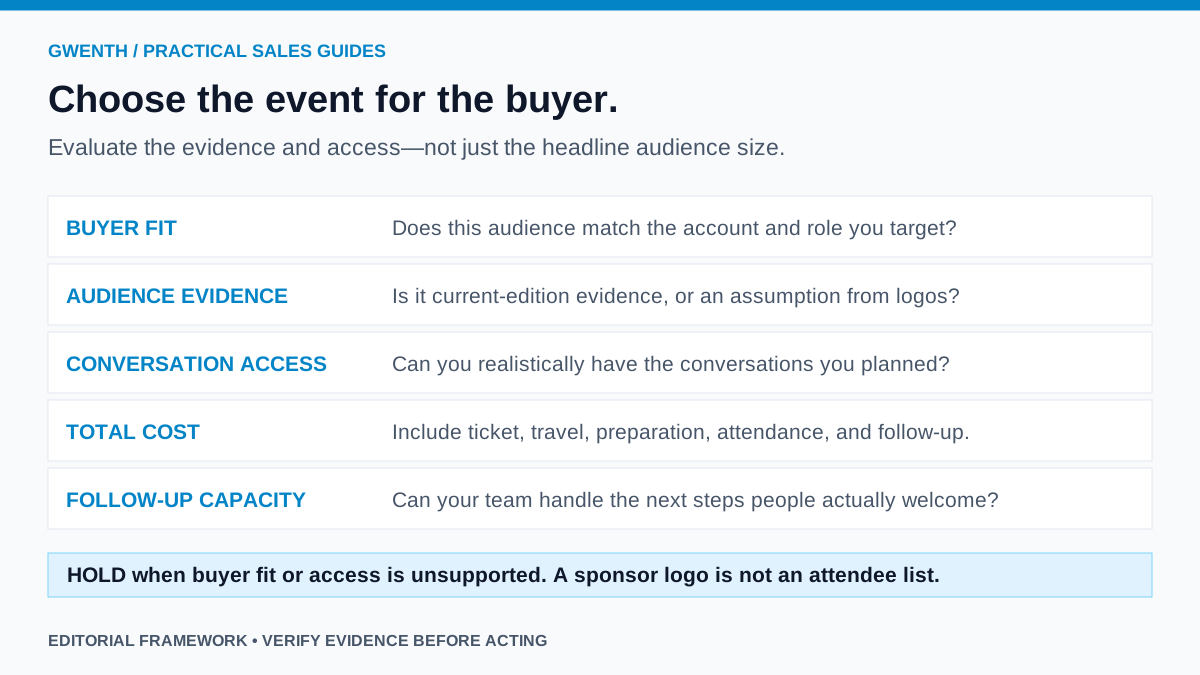
Scroll horizontally to inspect the diagram.
A large conference can fill an entire day without producing one conversation with a suitable buyer. A smaller industry session can be useful even when its website looks less impressive. The difference is not necessarily attendance. It is whether you can explain whom you hope to meet, why the setting is relevant, and what you would do after a useful conversation.
Short answer
Find worthwhile B2B sales events by starting with your target buyer, searching relevant organizers and event directories, and verifying the agenda, audience evidence, and access format. Compare the total cost with a realistic conversation plan. Treat speakers, exhibitors, sponsors, attendees, and confirmed meetings as distinct categories, and plan appropriate follow-up before buying a ticket.
Write an event brief before browsing
Describe the companies, business roles, geography, and problem you want to understand. Include a reason those people would attend. “Business decision-makers” is too broad. “Operations leaders from small software companies discussing regional expansion” provides a usable filter.
Decide whether your goal is customer research, referral partners, direct prospects, or existing-account relationships. An event can be worthwhile for one of these without serving the others. Record the goal so you do not retrospectively call every conversation a qualified sales opportunity.
Search in three places
Start with industry associations and organizers whose audience overlaps your brief. Then examine relevant conferences, partner communities, and specialist meetups. Use directories to widen coverage, not to replace the organizer's own information.
Eventbrite documents filters for date, category, price, and online or in-person format. Search by your buyer's topic rather than only by “networking”. For example, a people-operations roundtable may be more relevant to an HR software seller than a broad startup gathering. That is a fit hypothesis to verify, not a guarantee about either event.
Finally, research the companies and roles associated with a promising event. LinkedIn's documented account and lead filters can help investigate business fit. A profile match does not prove that the person will attend.
Read the audience evidence correctly
| Published evidence | Reasonable interpretation | Do not assume |
|---|---|---|
| Speaker biography | This person is advertised as a speaker for the specified edition. | They are buying, available for a sales pitch, or confirmed beyond the listing. |
| Exhibitor list | The organizer lists that company as an exhibitor. | Its CEO or procurement owner will be present. |
| Sponsor logo | The company has an advertised sponsorship relationship. | The whole company is attending or relevant to your offer. |
| Past attendee examples | The organizer describes an earlier edition's audience. | The same people have registered for the current edition. |
| A confirmed meeting | A named person agreed to a specific conversation. | The person has a purchase project or authority to approve it. |
Check the year, date, time zone, venue, registration terms, and agenda against the current organizer page. A search result can surface a previous edition. Keep the URL and date checked with your event note; verify again before travel or an invitation.
Use a five-part decision card
Evaluate buyer fit, audience evidence, conversation access, total cost, and follow-up capacity. Write a brief reason for each instead of hiding uncertainty in one numerical score. “Access uncertain: no networking session or meeting facility described” is more actionable than “event quality 72”.
A practical decision rule is to hold the booking when either buyer fit or conversation access remains unsupported. Ask the organizer what the format permits. A keynote-heavy programme can be valuable for learning while offering few opportunities for the conversations you planned.
A worked choice between two events
Fictional, illustrative example: you sell a sales-operations workflow to lean B2B software teams. Event A is a large general technology exhibition with many vendors and an unclear attendee breakdown. Event B is a smaller founder workshop whose agenda includes practical sales operations and scheduled peer discussion.
Event B fits the stated goal more directly on the evidence available. Event A might still be useful for partner discovery, but that would be a different goal. Before deciding, check whether the workshop allows relevant conversations, whether places remain, and whether the advertised participants are actually part of the current edition.
The example does not show that small events outperform large ones. It shows how to choose against a specific objective instead of substituting a headline attendance figure for evidence.
Budget more than the ticket
Estimate ticket, travel, preparation, attendance, and follow-up time. A simple planning formula is: cash cost plus hours multiplied by your chosen internal time value. That time value is an assumption for comparing options, not an accounting statement or expected return.
For an illustrative budget, a S$120 ticket, S$30 travel allowance, and eight hours valued internally at S$40 produce a planning cost of S$470. If you plan four relevant conversations, the budget is S$117.50 per planned conversation—not per lead, meeting achieved, or customer acquired. Replace the assumptions with your own and record actual outcomes separately.
Plan the conversation before the pitch
Prepare a short explanation of whom you help and a question connected to the session topic. In a founder-sales discussion, “How are you keeping prospect research and follow-up connected today?” can invite a useful exchange. Do not pretend you attended a talk, met someone previously, or know their internal difficulties.
Leave room for conversations that end in learning or disqualification. Respect event rules and people who do not want to discuss business. Participation is not an entitlement to contact details, private attendee lists, or continued promotional messages.
How Gwenth applies this
Gwenth can help organize available event, company, and relationship context alongside a sales workflow. Evaluate whether the event's relevance is explainable, whether you can distinguish a public listing from an actual interaction, and whether the next action retains that context. Source coverage and exact event-monitoring behaviour depend on the configured workflow.
After a real conversation, record what was discussed, what follow-up was welcomed, and who owns it. The event follow-up playbook covers the next stage. For U.S. commercial email, the FTC's CAN-SPAM requirements still apply; other applicable laws and channel policies may be stricter. This is operational guidance, not legal advice.
Questions to settle before booking
Can I prospect from an exhibitor list?
Use a public, permitted list to research whether a company fits. It does not establish the attendance or interest of a specific person, and it does not automatically authorize outreach.
How do I know whether the event worked?
Review relevant conversations, agreed next steps, useful introductions, and disqualifications against your original goal. Keep customer acquisition and revenue separate from attendance and contact counts.
Editorial note: AI assisted drafting and graphics. Event examples and budget assumptions are fictional and illustrative, not observed customer outcomes or predictions.
Tags
References
Source material used for factual context in this article.
- Using the Eventbrite app
Eventbrite · Accessed
Documents event discovery and filters for date, category, price, and online versus in-person format; organizer listings still need relevance checks.
- How to Use LinkedIn Sales Navigator
LinkedIn · Accessed
Supports researching companies and business roles around an event; a public profile or saved lead does not establish attendance or permission to contact.
- CAN-SPAM Act: A Compliance Guide for Business
Federal Trade Commission · Accessed
Provides U.S. commercial-email requirements relevant to follow-up. Event participation does not remove the sender’s compliance responsibilities.